The Dangote Refinery IPO has attracted significant attention from Nigerian investors following the opening of the public offer on September 14, 2026. Dangote IPO risks.
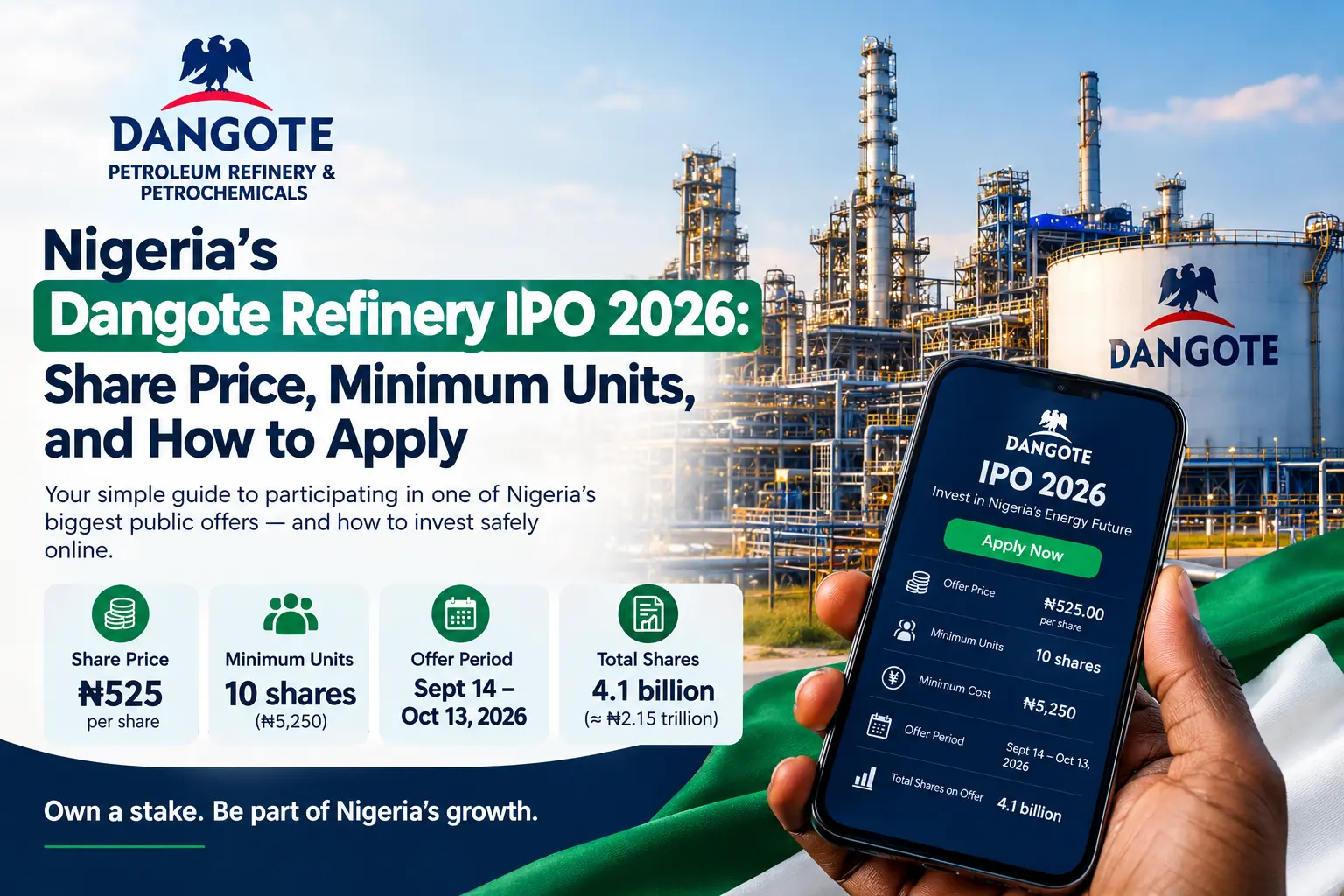
Shares are being offered at ₦525 each, with a minimum subscription of 10 shares, costing ₦5,250. The offer is scheduled to close on October 13, 2026.
However, the fact that a company is large, well-known or strategically important does not mean its shares are risk-free. Buying an IPO means becoming an investor in the underlying business, and the value of the investment can rise or fall after the shares begin trading.
Before putting money into the Dangote Refinery IPO, investors should understand the offer structure, the company’s business model and the risks that could affect future earnings and the value of the shares.
Investors should understand the risks involved before buying Dangote Refinery IPO shares.
The offer involves 4.1 billion ordinary shares at ₦525 per share, with the potential to raise approximately ₦2.15 trillion if fully subscribed. The proposed shares are expected to be listed on the Main Board of the Nigerian Exchange.
The company currently operates a refinery with a processing capacity of approximately 700,000 barrels per day and has plans to expand its capacity significantly.
Paying ₦525 per share does not mean that the share will later trade above ₦525.
Once the shares are listed and trading begins, the market price will be determined by buyers and sellers. The price could move above the IPO price, remain around it or fall below it.
One of the major issues investors should examine is the valuation implied by the IPO price.
At ₦525 per share, the offer has generated considerable discussion among market analysts about how much the refinery business is worth relative to its earnings, assets and international peers.
BusinessDay reported that the offer price has prompted debate about whether the implied valuation is demanding when compared with other large refining and energy companies.
This does not automatically mean the shares are expensive or cheap. Rather, it means investors should look beyond the headline share price.
₦525 is only the price of one share. It does not by itself tell you whether the company is attractively valued.
Investors should consider measures such as earnings, cash flow, assets, debt, future growth expectations and valuation multiples when assessing the offer.
3. Refinery Earnings Are Exposed to Oil and Fuel Market Cycles
The profitability of a refinery can be affected by crude oil prices, refined petroleum product prices, refining margins, supply and demand, transportation costs and other factors affecting the energy market.
A period of strong refining margins can support higher earnings, while weaker margins can put pressure on profitability.
This means that strong recent financial performance should not automatically be interpreted as a guarantee that the same level of earnings will continue indefinitely.
4. The Refinery’s Expansion Creates Execution Risk
Dangote Refinery has an ambitious expansion plan that could increase its processing capacity from approximately 700,000 barrels per day to about 1.4 million barrels per day.
Expansion can create additional opportunities, but large industrial projects also involve execution risks.
Currency movements are another factor investors should understand.
The Dangote Refinery operates in an industry with significant international exposure. Crude oil, refined products, equipment, financing and other business activities can involve foreign currencies.
For Nigerian investors, movements in the naira exchange rate can affect the company’s costs, revenues, assets and liabilities in different ways.
For investors outside Nigeria, there is an additional currency consideration: the value of their investment in their home currency can change even if the share price in naira remains unchanged.
For example, an investor whose home currency is stronger against the naira could experience a different return when converting the investment back into that currency.
6. Dividend Payments Are Not Guaranteed
Buying shares does not automatically mean receiving regular dividends.
Dividends depend on the company’s financial performance, cash position, board recommendations, shareholder approval and the company’s capital allocation decisions.
Because the refinery has major expansion plans, investors should not assume that future profits will necessarily be distributed entirely as dividends.
If demand exceeds the number of shares available under the offer, the final allocation can be lower than the number of shares an investor applied for.
The offer documentation provides for a basis of allotment in the event of oversubscription. Investors should therefore distinguish between the number of shares requested and the number of shares ultimately allotted.
Running a refinery of this scale involves substantial operational complexity.
Equipment failures, maintenance requirements, interruptions to crude supply, logistics problems, power and infrastructure challenges, accidents and other operational events can affect production and financial performance.
Large industrial facilities also require continuous maintenance and significant capital expenditure.
Investors should therefore understand that owning shares means participating in the economic performance of the business, including its operational risks.
A refinery needs reliable access to crude oil or other feedstock to operate efficiently.
Any significant disruption to crude supply, transportation infrastructure, international supply arrangements or domestic production could affect refinery utilization.
Changes in areas such as petroleum pricing, taxation, crude supply arrangements, environmental regulations, import and export policies or other energy-sector rules could affect the company’s operations and profitability.
Investors should therefore pay attention to regulatory developments after purchasing the shares.
Although Dangote Refinery is a very large facility, it operates within a competitive energy market.
Its performance can be affected by competition from other refineries, imported petroleum products, international refiners and changes in energy consumption.
If an investment increases in nominal naira terms but inflation rises significantly during the same period, the investor’s real purchasing-power gain may be much smaller.
This is particularly important for long-term investors who are comparing shares with other assets and investment opportunities.
Shares are generally more suitable for money that an investor can leave invested for an appropriate period rather than funds needed immediately for rent, school fees, medical expenses, emergencies or daily living costs.
The market price can move unexpectedly, meaning an investor who needs to sell at a particular time could be forced to sell at a loss.
Before investing, consider whether you have sufficient emergency funds and whether the amount you plan to invest is money you can afford to leave exposed to market movements.
15. The ₦5,250 Minimum Does Not Mean ₦5,250 Is the Right Amount for Everyone
That makes the offer accessible to investors with relatively small amounts of capital.
However, investors should determine the amount they are comfortable putting at risk rather than simply investing because the minimum entry amount is affordable.
What matters is how efficiently that capacity is utilized, the cost of crude and other inputs, refining margins, operating expenses, product prices, financing costs, taxes, foreign exchange movements and the company’s ability to execute its growth plans.
Similarly, strong recent earnings are important information but do not guarantee that future earnings will remain at the same level.
Before subscribing, investors may want to ask themselves:
Can I afford to lose part of the money I am investing?
How long am I prepared to hold the shares?
Have I read the official offer documentation?
Do I understand how the refinery makes money?
Have I considered the effect of oil prices and refining margins?
Do I understand the company’s expansion plans?
Have I considered currency and inflation risks?
Am I investing based on the company’s fundamentals or simply because the IPO is popular?
Do I understand that the share price can fall after listing?
Would investing this amount affect money I need for essential expenses?
Investors should review the official offer documents and understand the risks before subscribing.
Read the Official IPO Documents Before Investing
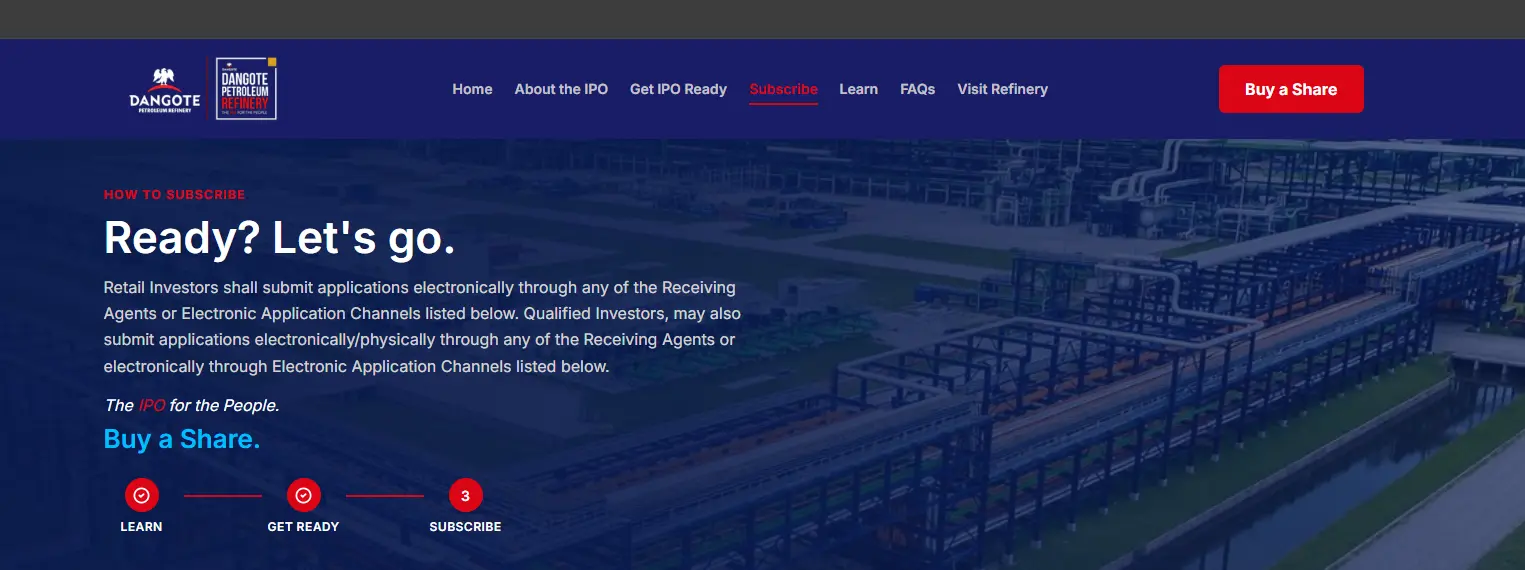
The safest way to understand the specific terms, risks and conditions of the offer is to read the official offer documentation and use approved subscription channels.
The official Dangote IPO website currently lists the offer price as ₦525, minimum subscription as 10 shares and the offer period as September 14 to October 13, 2026.
Investors should also be cautious of people or websites promising guaranteed returns or asking investors to transfer money to personal accounts.
The Dangote Refinery IPO gives investors an opportunity to buy shares in a major Nigerian industrial business, but it remains an equity investment and therefore carries investment risk.
The key risks include possible share-price declines, valuation risk, oil and refining-market cycles, expansion execution risk, operational challenges, currency movements, inflation, regulatory changes, competition and uncertainty around future dividends.
The most important point is that there is no guaranteed profit simply because the company is well known or the IPO has attracted substantial public interest.
Investors should read the official offer documents, understand their own financial position and risk tolerance, and make their investment decisions based on information rather than excitement surrounding the IPO.
Disclaimer: This article is for educational and informational purposes only and does not constitute investment advice or a recommendation to buy or sell Dangote Refinery shares. Investors should review the official offer documents and, where appropriate, seek advice from a qualified financial professional before making an investment decision.
Frequently Asked Questions
Is the Dangote Refinery IPO risk-free?
No. Buying shares carries investment risk. The market value of the shares can rise or fall after listing, and investors may lose part or all of the money invested.
What is the minimum amount to buy Dangote Refinery IPO shares?
The minimum subscription is 10 shares at ₦525 each, making the minimum subscription amount ₦5,250.
Can the Dangote Refinery share price fall after the IPO?
Yes. Once the shares trade on the market, the price can move above or below the IPO price depending on market demand, company performance, investor sentiment and other economic and business factors.
No. Dividends are not guaranteed. Future dividend payments depend on the company’s financial performance, cash requirements, capital allocation decisions and applicable corporate approvals.
What are the biggest risks of the Dangote IPO?
Important risks include share-price volatility, valuation risk, oil and refining-market cycles, expansion execution risk, operational risks, foreign-exchange movements, inflation, regulatory changes and competition.