1688 Now Delivers to Nigeria: How Nigerians Can Buy From 1688 and Get Products Delivered
For years, Nigerians interested in buying from 1688 faced a major problem: the platform was designed primarily for China’s domestic wholesale market, making payment, communication and international shipping difficult. 1688 Now Delivers to Nigeria: How Nigerians Can Buy From 1688 and Get Products Delivered
That situation is changing.
In 2026, Nigerian buyers have more practical options for sourcing products from 1688 and getting them shipped from China to Nigeria. Recent developments around cross-border payments and international logistics have made the process easier, although buyers still need to understand how shipping, customs, supplier verification and delivery work before placing an order.
1688 remains particularly attractive because it connects buyers with Chinese manufacturers, wholesalers and suppliers, often at prices designed for the domestic Chinese market.
So, can you buy from 1688 in Nigeria? Yes. But understanding the difference between buying the product and getting that product delivered to Nigeria is important.
What Is 1688?

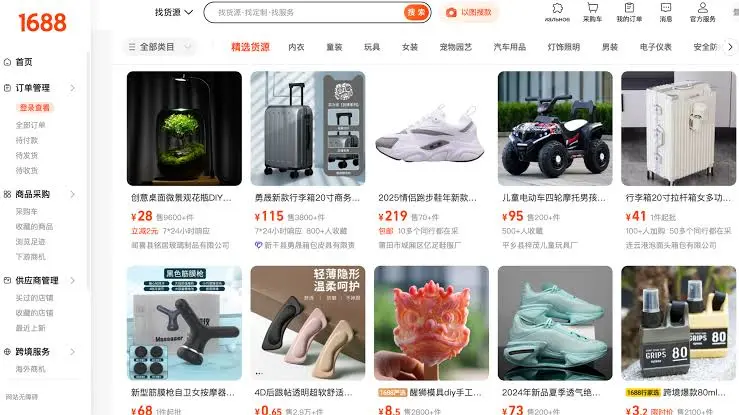
1688 is Alibaba Group’s China-focused wholesale marketplace. Unlike Alibaba.com, which was built primarily for international buyers, 1688 was designed around China’s domestic wholesale market.
The platform allows businesses and resellers to source products from Chinese manufacturers, wholesalers and trading companies.
Common products available on 1688 include:
- Fashion and clothing
- Shoes and bags
- Phone accessories
- Electronics and gadgets
- Beauty products
- Home and kitchen items
- Automobile accessories
- Office supplies
- Packaging materials
- Manufacturing and industrial products

One reason Nigerian importers are increasingly interested in 1688 is pricing. Because the platform targets China’s domestic wholesale market, buyers can sometimes find products at prices below what they see on international marketplaces.
However, a cheap product price does not automatically mean a cheap final cost. Shipping, customs, payment fees and other import expenses must be included when calculating your actual landed cost.
Can Nigerians Buy From 1688?
Yes, Nigerians can buy products from 1688.
However, the process is different from ordering from a platform such as AliExpress.
1688 was built mainly for the Chinese market. Its interface is primarily in Chinese, many suppliers communicate in Chinese, and traditional payment and logistics arrangements have historically been designed around domestic Chinese buyers.
Recent guides for African buyers confirm that international buyers can source from 1688, but may need additional arrangements for payment, supplier communication and international logistics.
This means a Nigerian buyer should think of the process as four separate stages:
- Find the product and supplier.
- Pay for the product.
- Move the goods from the Chinese supplier to an international shipping point.
- Ship and clear the goods in Nigeria.
Does 1688 Deliver Directly to Nigeria?
This is where things become slightly complicated.
Some 1688-related cross-border shipping options and services can make international delivery possible, and recent reports indicate that Nigeria has been included among destinations supported by newer overseas shipping arrangements.
However, you should not assume that every product or every supplier on 1688 can ship directly to your Nigerian address.
WorldFirst’s 2026 Africa sourcing guide notes that most 1688 suppliers traditionally support domestic Chinese shipping, meaning buyers often need a freight forwarder or 1688 agent to handle the international leg.
Therefore, whether you can use direct international delivery depends on the product, supplier, shipping option available at checkout and the destination supported for that particular order.
For many Nigerian buyers, the traditional arrangement remains straightforward: the Chinese supplier sends the goods to a warehouse in China, and a freight forwarder consolidates and ships the goods to Nigeria.
How the 1688-to-Nigeria Shipping Process Works
A typical order can follow this process:
1. Find a product on 1688
Search for the product you want and compare several suppliers instead of immediately buying from the first seller you find.
Because 1688 is largely Chinese-language, Nigerian buyers can use browser translation tools or translate product keywords into Chinese.
Image search can also be useful when you already have a picture of the product you want.
2. Check the supplier
Do not choose a supplier based solely on the cheapest price.
Look at the supplier’s operating history, response rate, product reviews, transaction history and other available information.
If you are placing a large order, consider ordering a sample first.
3. Place and pay for the order
Payment has historically been one of the biggest challenges for international 1688 buyers.
1688 was designed around Chinese payment infrastructure, with suppliers traditionally expecting payments in Chinese currency.
However, international payment options have expanded. WorldFirst’s current Africa guide says its World Pay service provides a cross-border route for eligible African businesses to pay 1688 suppliers in Chinese currency.
Always check the payment options currently available to your account before placing a large order.
4. Send the products to a Chinese warehouse
If your supplier does not provide international shipping, you can use a freight forwarder or sourcing agent.
The supplier sends your goods to the forwarder’s warehouse in China.
If you have purchased products from several suppliers, the forwarder can potentially consolidate them into one shipment.
5. Ship from China to Nigeria
Once the goods reach the warehouse, you choose the appropriate shipping method.
The two major options for Nigerian importers are generally air freight and sea freight.
Air Freight vs Sea Freight From China to Nigeria
| Shipping Method | Speed | Best For | Cost |
|---|---|---|---|
| Air Freight | Usually much faster | Small, valuable or urgent goods | Higher |
| Sea Freight | Usually slower | Large and heavy shipments | Lower per unit for bulk |
Recent 2026 shipping guidance puts air freight from China to Nigeria at roughly 5–15 days in some arrangements, while sea freight can take around 30–45 days. Actual delivery times can vary because of supplier preparation, consolidation, customs clearance, port congestion and local delivery.
For a small batch of phone accessories, clothing or other lightweight products, air freight may make more sense.
For large quantities of furniture, machinery, clothing or other bulky products, sea freight may provide a better cost structure.
How Much Does It Cost to Ship From 1688 to Nigeria?
There is no single 1688-to-Nigeria shipping price.
Your final shipping cost can depend on:
- Weight of the goods
- Volume of the shipment
- Product category
- Shipping method
- Origin city in China
- Destination in Nigeria
- Whether the goods are consolidated
- Customs and clearance charges
- Local delivery charges
For air freight, pricing is often based on chargeable weight. Sea freight may be calculated according to container or volume arrangements.
That is why you should obtain a shipping quotation before buying large quantities.
Important: Never calculate your expected profit using only the 1688 product price. Add product cost, China domestic delivery, international freight, customs-related charges, payment costs and Nigerian last-mile delivery before deciding whether a product is profitable.
How Long Does 1688 Take to Deliver to Nigeria?
The answer depends on the shipping method.
As a broad 2026 guide, air freight can take approximately 5–15 days in some China-Nigeria shipping arrangements, while sea freight can take roughly 30–45 days. These are estimates rather than guaranteed delivery times.
The complete process can take longer because your supplier may need several days to prepare the goods before they even reach the shipping warehouse.
A typical order can therefore involve:
- Product selection
- Supplier confirmation
- Payment
- Supplier processing
- Domestic Chinese delivery
- Warehouse inspection or consolidation
- International transportation
- Nigerian customs clearance
- Local delivery
Do You Need a 1688 Agent?
Not necessarily.
But an experienced agent or freight forwarder can make the process significantly easier for beginners.
An agent may help with:
- Communicating with Chinese suppliers
- Making supplier payments
- Product sourcing
- Quality inspection
- Receiving products in China
- Combining products from different suppliers
- International shipping
- Customs and delivery arrangements
If you are experienced and have access to appropriate payment and logistics options, you may be able to manage more of the process yourself.
For beginners, however, trying to save a small agent fee while risking an expensive shipment may not always be the best decision.
What About Customs in Nigeria?
Getting your goods to Nigeria is not necessarily the end of the process.
Imported goods may be subject to customs procedures, duties, taxes and documentation requirements depending on the type and value of the shipment.
Recent Nigeria-focused import guidance notes that customs charges can depend on factors including the product’s HS code and CIF value.
Before importing commercially, make sure you understand the requirements that apply to your specific product.
Some products can also have additional regulatory requirements. Electronics, food, cosmetics, medical products and other regulated categories may require particular documentation or approvals.
Is 1688 Better Than Alibaba for Nigerians?
It depends on what you value.
1688 can be attractive when price and factory-level sourcing are your priorities.
Alibaba.com can be easier for international buyers because it was designed specifically for cross-border commerce and generally provides a more international buying experience.
| Feature | 1688 | Alibaba.com |
|---|---|---|
| Main market | China | International |
| Language | Mainly Chinese | International/English-focused |
| Pricing | Often lower wholesale pricing | Often higher |
| International shipping | May require additional arrangements | Designed for international trade |
| Beginner friendliness | Lower | Higher |
For a Nigerian entrepreneur who already understands importing and has a reliable shipping arrangement, 1688 can potentially offer attractive margins.
For someone completely new to importing, Alibaba may provide a simpler starting point.
Is It Safe to Buy From 1688?
1688 is a major Chinese wholesale marketplace, but buyers should still perform their own supplier checks.
Do not assume that every supplier offering a very low price is trustworthy.
Before making a large payment:
- Check supplier history.
- Read available customer feedback.
- Compare several suppliers.
- Ask for product specifications.
- Request samples when practical.
- Confirm the exact quantity and specifications.
- Keep records of your agreement.
- Use appropriate payment channels.
- Understand your shipping costs before ordering.
What Nigerians Should Know Before Ordering From 1688
The biggest mistake is looking only at the product price.
Imagine you find a product for the equivalent of ₦5,000 on 1688 while competitors in Nigeria sell it for ₦12,000.
That does not automatically mean you will make ₦7,000 profit.
You still have to account for:
- Payment conversion
- China domestic delivery
- Agent or sourcing fees
- International shipping
- Customs charges
- Local transportation
- Packaging
- Possible damaged or defective goods
- Marketing costs
Only after calculating the landed cost can you determine whether the product is genuinely profitable.
Bottom Line: Can 1688 Products Be Delivered to Nigeria?
Yes, Nigerians can source products from 1688 and have them delivered to Nigeria.
The important development is that international buyers now have more options for payment and cross-border logistics than they did previously.
However, 1688 remains fundamentally different from an international retail marketplace. Not every supplier automatically offers direct shipping to Nigeria, so buyers should verify the available shipping method for each order.
For many Nigerian importers, the practical route remains to purchase from 1688, send the goods to a Chinese warehouse or freight forwarder, consolidate the shipment where appropriate, and then transport the goods to Nigeria by air or sea.
If you are planning to start importing from China, do not rush because a product looks cheap. First calculate the complete landed cost, verify the supplier and confirm the shipping arrangement.
Are You Buying From 1688 to Nigeria?
Have you used 1688’s shipping options to send products to Nigeria? Share your experience in the comments. Tell us whether you used direct shipping, an agent or a freight forwarder and how long your delivery took.




[…] 1688 Now Delivers to Nigeria: How Nigerians Can Buy From 1688 and Get Products Delivered […]