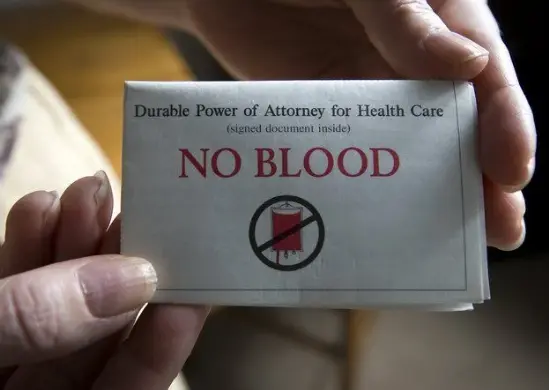
Jehovah’s Witnesses Change Blood Transfusion Policy: What the New Rule Means: Jehovah’s Witnesses have announced an adjustment to their long-standing position on blood transfusions, giving individual members the freedom to decide whether to accept or donate four main blood components based on personal conscience.
Table of Contents
The change was announced by the Governing Body of Jehovah’s Witnesses on September 18, 2026, through an official statement issued from the organisation’s World Headquarters in Warwick, New York.
Under the revised position, decisions concerning red blood cells, white blood cells, plasma and platelets are now left to the individual conscience of each Witness.
Jehovah’s Witnesses have announced a change concerning the use of the four main blood components.
What Has Jehovah’s Witnesses Changed About Blood Transfusions?
The organisation’s latest announcement changes its position on the four primary components of blood.
Jehovah’s Witnesses now say that each member can personally decide whether to accept blood components from another person for medical or surgical treatment.
The organisation also said individual Witnesses can decide whether to donate blood specifically for the purpose of producing components or fractions for another person’s medical treatment.
According to the organisation, these decisions are now matters of individual conscience rather than something on which congregations should intervene.
The organisation explicitly stated that its long-standing position against receiving whole blood remains unchanged. Its explanation continues to refer to the biblical command to “abstain from blood.”
Therefore, the announcement should not be interpreted as Jehovah’s Witnesses completely abandoning their blood-transfusion position.
Instead, the organisation has changed its position regarding the four major components that can be separated from donated blood.
What Does the New Policy Mean for Jehovah’s Witnesses?
The practical effect is that an individual Jehovah’s Witness can now make a personal decision about whether to accept one or more of the four main blood components during medical treatment.
Paul Gillies, an international spokesman for Jehovah’s Witnesses, said medical decisions involving blood components are matters of conscience between each individual Witness and God.
This means that the new position provides greater individual choice while maintaining the organisation’s broader religious teaching that blood is sacred.
However, the organisation’s prohibition on whole-blood transfusions remains in place.
Therefore, saying simply that “Jehovah’s Witnesses now accept blood transfusions” would be misleading. The policy specifically concerns the four primary blood components and does not remove the religious position against whole blood.
The revised position also addresses blood donation.
According to the organisation, each Witness can decide whether to donate blood when the clearly stated purpose is for the blood to be processed into components or fractions for medical use by another person.
Its statement says that because the Bible does not specifically comment on decisions involving the four primary blood components, those decisions can be left to individual conscience.
The organisation has therefore extended its principle of personal decision-making to red cells, white cells, plasma and platelets.
The September announcement follows another change concerning blood earlier in 2026.
In March, Jehovah’s Witnesses announced that individual members could decide whether their own blood could be collected, stored and returned to them during medical procedures.
Red blood cells carry oxygen throughout the body and are commonly used in medical treatment when a patient has significant blood loss or certain forms of anaemia.
White Blood Cells
White blood cells play an important role in the body’s immune system. Transfusions involving white cells are less common than red-cell, plasma or platelet transfusions and may be used in specialised medical circumstances.
Plasma is the liquid portion of blood and contains proteins and other substances involved in several important bodily functions, including blood clotting.
Platelets
Platelets help the blood to clot and may be administered to patients who have very low platelet levels or certain bleeding risks.
What Jehovah’s Witnesses Say About Medical Treatment
The organisation says its members seek professional medical care and do not practise faith healing.
Jehovah’s Witnesses state that they want quality medical treatment while also seeking healthcare providers who can provide treatment consistent with their individual wishes, values and beliefs.
The organisation’s medical information for clinicians has also been updated to reflect the September 18, 2026 adjustment concerning the four primary blood components.
What Remains Unchanged?
Despite the new policy, several aspects of the organisation’s position remain unchanged.
The religious view that blood is sacred remains.
The prohibition on receiving whole blood remains.
Members are still expected to make decisions consistent with their personal religious convictions.
Local congregations are not to intervene in individual conscience decisions involving the four components.
Healthcare providers should therefore discuss the specific treatment and blood component involved with the patient and document the patient’s wishes appropriately.
The change is significant because the four components covered by the announcement represent the principal components into which donated whole blood can be separated for medical use.
Previously, Jehovah’s Witnesses distinguished between the primary blood components and smaller fractions derived from them. The latest announcement extends individual conscience to the four primary components themselves.
The organisation has nevertheless maintained a distinction between these components and whole blood.
Official Jehovah’s Witnesses Statement
The organisation’s official announcement was published on its website on September 18, 2026, under the headline “Jehovah’s Witnesses: Each Witness Now Decides Whether to Accept or Donate Main Blood Components.”
The official medical information page also carries an updated notice explaining the new position concerning donor red blood cells, white blood cells, plasma and platelets.
Yes. On September 18, 2026, the Governing Body announced that individual Witnesses can decide whether to accept or donate red blood cells, white blood cells, plasma and platelets based on personal conscience.
Can Jehovah’s Witnesses now receive blood?
Individual Witnesses can now decide whether to accept the four main blood components. However, the organisation’s prohibition on whole-blood transfusions remains unchanged.
Each Witness can decide whether to donate blood specifically for the clearly expressed purpose of producing components or fractions for another person’s medical treatment.
Is whole-blood transfusion now allowed by Jehovah’s Witnesses?
No. The organisation’s longstanding refusal of whole-blood transfusions remains unchanged.
Who decides whether a Jehovah’s Witness accepts a blood component?
The individual Witness makes the decision as a matter of personal conscience. The organisation says local congregations do not intervene in these personal decisions.
Source: Official Jehovah’s Witnesses announcement and current reporting from PUNCH, Vanguard and Associated Press.